How to Calm Your Nervous System: A Gentle Guide Through Polyvagal Theory

Ever feel like your body is stuck in overdrive or completely shut down and you can’t explain why? Same. Our minds and bodies are deeply connected, and understanding how your nervous system works can change the game when it comes to stress, trauma, and emotional overwhelm.
One of my favorite frameworks for this is something called Polyvagal Theory. It was developed by Dr. Stephen Porges and gives us a really helpful way to understand why we react the way we do—and more importantly, how to find our way back to calm.
Let’s break it down in a way that actually makes sense—and talk about how to gently deactivate your nervous system when it feels like too much.
What Is the Nervous System, Anyway?
Okay, quick refresher: your central nervous system (CNS) includes your brain and spinal cord, and it basically runs the show. It keeps your heart beating, your lungs breathing, and your body reacting to everything around you.
Then there’s the autonomic nervous system (ANS), which is in charge of all the things you don’t think about (like digestion and your stress response). The ANS has two main branches:
- Sympathetic Nervous System (SNS): Think of this as your body’s “fight or flight” mode. When your brain senses a threat, it speeds everything up to protect you.
- Parasympathetic Nervous System (PNS): This is your body’s “rest and restore” mode, and it’s where the magic happens when it comes to healing and feeling safe again.
The star of the show in Polyvagal Theory is the vagus nerve. It’s this long nerve that connects your brain to your body and plays a huge role in how you respond to stress.
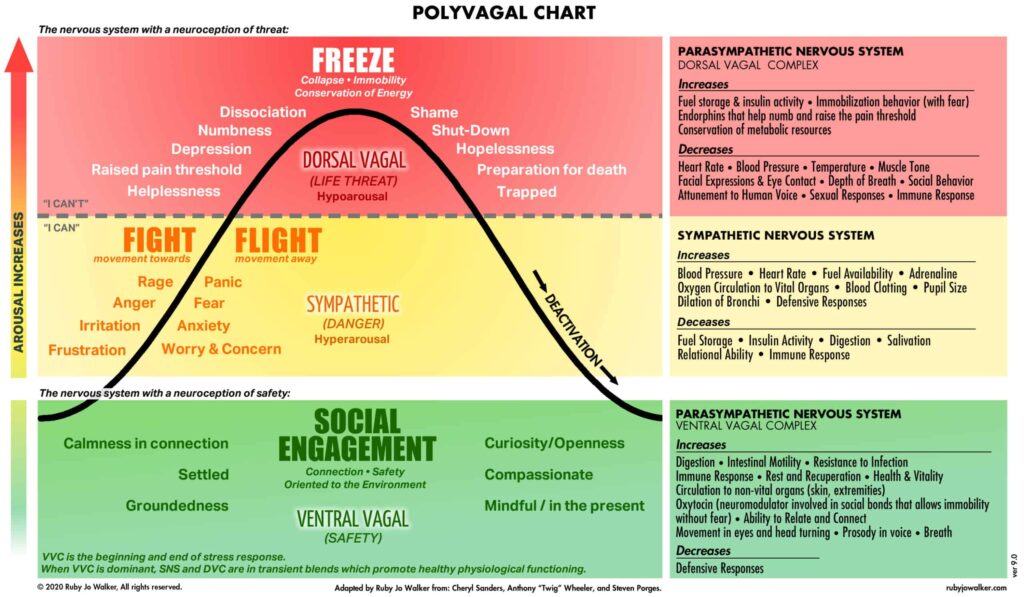
Image credit: The Movement Paradigm, used for educational purposes
The Three Nervous System States (and Why They Matter)
Dr. Porges breaks it down into three main states that your body moves through, depending on how safe (or unsafe) you feel:
- Ventral Vagal (Safe + Connected):
This is your most regulated state. You feel grounded, open, social, and calm. Your body feels safe enough to rest, digest, and connect with others. - Sympathetic (Fight or Flight):
This kicks in when your body senses danger. You might feel anxious, restless, on edge, or super activated—like you’re ready to run or fight. - Dorsal Vagal (Freeze or Shutdown):
When things feel too overwhelming, your system might shut down. This can feel like numbness, disconnection, or like you’re just “checked out.”
Understanding these states helps you recognize what’s happening in your body—and start to shift it in a more compassionate way.
So How Do I Calm My Nervous System?
Here are a few gentle, science-backed ways to regulate your nervous system and come back to that grounded, safe place:
1. Breathe Slowly + Deeply
Breath is a secret superpower. Slow, intentional breathing sends a message to your body that you’re safe.
Try this: Inhale through your nose for 4 counts, hold for 4, and exhale through your mouth for 6–8. Repeat a few times, especially when you feel anxious or activated.
2. Stimulate the Vagus Nerve (In Simple Ways)
The vagus nerve loves rhythm and sound and there are easy ways to activate it:
- Humming or singing
- Gargling with water
- Splashing cold water on your face
- Doing long exhales (like sighing out loud)
3. Ground Yourself in the Present
When you’re spiraling or feeling disconnected, grounding brings you back into your body—through small, intentional practices like walking barefoot in the grass, laying down with your feet up the wall, or using a weighted blanket to provide calming pressure to your nervous system.
Try this quick exercise for grounding:
- 5 things you can see
- 4 things you can touch
- 3 things you can hear
- 2 things you can smell
- 1 thing you can taste
It’s a reset button for your brain and body.
4. Move Your Body Gently
You don’t need a hardcore workout. Your body just wants to move.
Go for a slow walk. Stretch. Try a yoga flow or dance around your kitchen. Movement helps your body release stress and return to balance.
5. Practice Mindfulness (Without Judgment)
Mindfulness isn’t about clearing your mind—it’s about being kind to yourself while noticing what’s going on.
Start small: sit for 2–3 minutes and just notice your breath. Or try a body scan. Or listen to a calming playlist and check in with how your body feels.
6. Reach for Connection
We heal in relationship, not isolation. When you feel safe with someone, your nervous system feels it too.
Call a friend. Hug someone you trust. Sit with someone you love, even in silence. Your body will thank you.
7. Create a Safe Space
Your environment matters. Soothing spaces can help your body relax.
Think soft lighting, cozy blankets, calming scents, quiet music, anything that signals safety. It doesn’t have to be perfect, just intentional.
Use IFS to Calm Inner Conflict
Internal Family Systems (IFS) is one of my favorite tools for gently working with emotional overwhelm and inner parts. It’s all about connecting with the different “parts” of yourself with curiosity, not judgment.
Here are a few ways to use IFS to regulate your nervous system:
- Notice what part of you is activated. Pause and ask: “What part of me is feeling anxious/sad/shut down right now?”
- Turn toward it with curiosity. Instead of pushing it away, get to know it. Ask, “What do you need me to know?”
- Offer compassion and presence. Let the part know you’re here and you’re listening. That alone is regulating.
- Let parts unblend. If a part has taken over, thank it for trying to protect you, and gently ask it to give you a little space.
Even just these small moments of internal connection can shift your whole system.
Use EMDR-Inspired Tools to Find Safety
EMDR (Eye Movement Desensitization and Reprocessing) is a powerful therapy for trauma, but it also offers tools you can use anytime to help your body feel more regulated.
Here are a few nervous-system-friendly EMDR strategies:
- Bilateral stimulation. Gently tap your hands or feet left-right-left-right. This rhythmic motion can help calm anxiety and bring you into the present.
- Use a calm place visualization. Picture a space where you feel completely safe. Imagine what it looks like, smells like, and feels like.
- Butterfly hug. Cross your arms over your chest and tap your shoulders, alternating sides. It’s soothing and grounding.
- Notice body sensations. Tune into your body and gently name what you feel: “There’s tension in my chest” or “My hands feel warm.”
- Use resourcing. Think of a time you felt supported, strong, or calm. Let yourself really feel that memory in your body.
You don’t have to be in a session to benefit from these tools- they’re gentle, accessible ways to soothe your system wherever you are.
Final Thoughts
If you’re walking through stress or healing from trauma, you’re not alone—and your body isn’t broken. It’s just trying to protect you.
Polyvagal Theory helps us understand why we react the way we do and gives us simple tools to return to safety and connection. You don’t have to push through or tough it out. You can learn to listen, respond gently, and come back home to yourself—one small step at a time.
If this article resonated with you and you’re feeling ready for support, I’d love to connect—email me at bayleigh@oliveandbayleigh.com
Author: Bayleigh Griffith, MA, LCMHCA, CTP